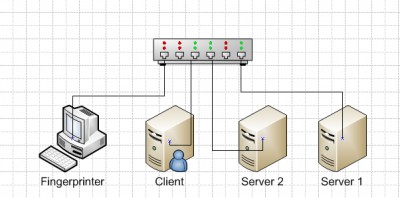
Other than by MAC address and hostname what are the other definitive ways to identify the specific computer that is being used to connect to a public AP? Or, to identify it's precise location so as to either block connections from that location, or create a user profile from a specific machine? Most already know how to change a Mac address, but other things are not so changeable.
R U being watched?-wifi a honeytrap
Mar 16, 2009
5 Replies
If you've got multiple access points you could see which one it was associated with. If not, no. I've never seen an AP that can report the direction/distance a client is. There are authentication mechanisms that can be added to wireless networks, but I assume you want to keep the AP public, otherwise you would have already taken that route.
The browser will send a User-Agent string that gives varying information depending on the browser used, but like the MAC this can be changed. The OS used can be identified by its IP fingerprint. If you've got access to the machine in question, you could install something on it that will identify it on the network.
Thank you for the reply. Can you comment further on what "IP fingerprint" is and how it is manifested and detected?
alexd wrote in news: snipped-for-privacy@ale.cx:
Look at the source code for nmap, and look at the output of
nmap -O your.ip.address
[compton ~]$ whatis nmap p0f nmap (1) - Network exploration tool and security scanner p0f (1) - identify remote systems passively [compton ~]$
The documentation that comes with p0f - specifically the README file, gives quite a lot of information. "Fyodor" (author of nmap) also has written extensively on the subject, as well as mechanisms to make such fingerprinting difficult. Of course, you _could_ try using a search engine:
Results 1 - 10 of about 1,670,000 for IP fingerprinting. (0.23 seconds)
and one of those results is
formatting link
Old guy
Further to the other suggestions, 'ntop' will attempt IP fingerprinting [amongst other things] and give you a pretty web interface to look at the results in, but it would require quite a bit of work to get it up and running.
Join the Discussion
Have something to add? Share your thoughts — no account required.
Didn't find your answer?
Ask the community — no account required