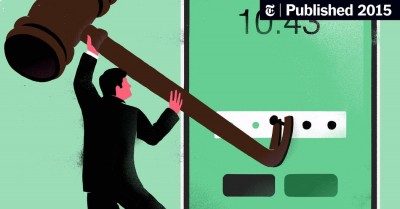
When Phone Encryption Blocks Justice
In June, a father of six was shot dead on a Monday afternoon in Evanston, Ill., a suburb 10 miles north of Chicago. The Evanston police believe that the victim, Ray C. Owens, had also been robbed. There were no witnesses to his killing, and no surveillance footage either.
With a killer on the loose and few leads at their disposal, investigators in Cook County, which includes Evanston, were encouraged when they found two smartphones alongside the body of the deceased: an iPhone 6 running on Apple's iOS 8 operating system, and a Samsung Galaxy S6 Edge running on Google's Android operating system. Both devices were passcode protected.
An Illinois state judge issued a warrant ordering Apple and Google to unlock the phones and share with authorities any data therein that could potentially solve the murder. Apple and Google replied, in essence, that they could not - because they did not know the user's passcode.