Well, it's generally frowned upon to cite it (or similar works) in
> scholarly writing at anything but the most elementary level. The
> same kind of scorn should be applied to writers who cite Wikipedia;
> unfortunately, sometimes it is not.
Well, then I guess my writings must be at that most elementary level. As I noted in my previous post on this subject, I find that Wikipedia articles (at least the technical ones I'm likely to cite) are accurate and well written. Of course, I review every cited article before I cite it, and I always cite the permanent link.
Wikipedia offers an advantage that few other websites offer: l> Wikipedia has more vulnerabilities than a traditional edited
collection like Britannica, but it contains a rather amazing amount
> of information. Of course, no secondary source should be trusted > very far.
That's undeniably true, but there are many situations where a set of facts is so well established and/or so lost in history that it's impossible even to identify, much less cite, the primary source. What, for example, it the primary source for parabola? Sonata? Empanada?
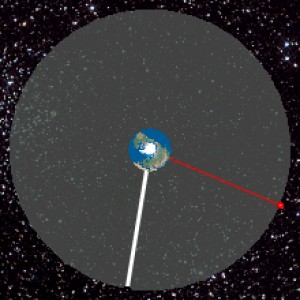
Or consider the example I mentioned in my previous post: the concept of the geostationary orbit. Who or what is the primary source? Arthur C. Clarke first published the idea [1], but even he disclaimed originality [2]. The FCC rules include a legal definition [3] which is based Federal Standard 1037C [4] which is based on the ITU Radio Regulations [5] (which costs 252 Swiss Franks to download). I suppose the ITU is the ultimate authority, but it's certainly not a primary source.
For my purposes, Wikipedia's definition [6], though certainly not primary, works: it's accurate, comprehensive, permanent, and free.
----------- Citations (mostly not Wikipedia) --------------
[1] Arthur C. Clarke. "Extra-Terrestrial Relays." Wireless World, October, 1945, 305-308. Reprinted in "Ascent to Orbit: A Scientific Autobiography." New York: John Wiley & Sons, 1984, 60-63.
[2] Arthur C. Clarke. "The Space Station: Its Radio Applications." "Ascent to Orbit," 53.
[3] National Archives and Records Administration. United States Code of Federal Regulations. 47 CFR 2.1.
2005, 08:48 UTC. 20 Dec 2005, 13:04